


Finished Your Aesthetics Foundation Course? 7 Next Steps to Build Your Confidence and Your Clinic

Finishing your Foundation aesthetics course is a big moment. You've learnt the anatomy, watched live demonstrations, practised on simulator faces and treated live models under supervision. Then the certificate is in your hand and a new question arrives: what now?
At Access 2 Aesthetics (A2A), the Aesthetics Training Academy, we support nurses, doctors, dentists, pharmacists, paramedics and other medical professionals through this exact stage. This guide sets out the practical next steps that help new injectors move from training day to a safe, confident and growing clinic.
What should you do after your aesthetics Foundation course?
Get your insurance, prescriber arrangements and paperwork in place, decide where you'll treat, start with a small diary, and keep building your confidence with supported practice and further training. There's no need to rush. The practitioners who do well tend to take steady steps and ask for help when they need it.
Seven next steps after your Foundation training
1. Put your insurance, prescriber and paperwork in place
Our insurance covers you while you're training with us, but before you treat your own clients you'll need suitable insurance in place for your own practice. Toxin is a prescription-only medicine, so every toxin client needs a prescription from a prescriber. You don't need to be a prescriber yourself to get started: prescribers in our support group can help with your toxin clients, and your pre-course e-learning includes pharmacy and insurance details to help you set things up.
2. Decide where you'll treat
Many new practitioners start from a home clinic, a room in a salon or a private clinic. Each has its pros and cons around cost, flexibility and how clients find you. Whichever you choose, make sure it's clean, private and set up for safe practice, with your emergency kit to hand.
3. Start with a small, manageable diary
You don't need a full diary straight away. Many medics begin alongside their existing role, often on days off or at weekends, and build up gradually. Our guide to starting aesthetics alongside your NHS job covers this in more detail.
4. Keep consultations, consent and aftercare consistent
Good habits from day one protect your clients and you. Use a thorough consultation for every client, take consent properly, keep clear records and give written aftercare. Your A2A e-learning includes consent and aftercare forms, so you're not starting from a blank page.

5. Build your confidence with a Shadow Day
If you'd like to see more treatments before you go it alone, our Shadow Day lets you spend a full clinical day with Helen Coombs, our Clinical Director, at our sister company Pro-Juvenate Aesthetics. You'll observe the ins and outs of a typical day in a non-surgical aesthetics clinic and have time to ask questions at the end. It's an observation day, so you won't treat patients yourself.
6. Get expert feedback in your own clinic with a Mentorship Day
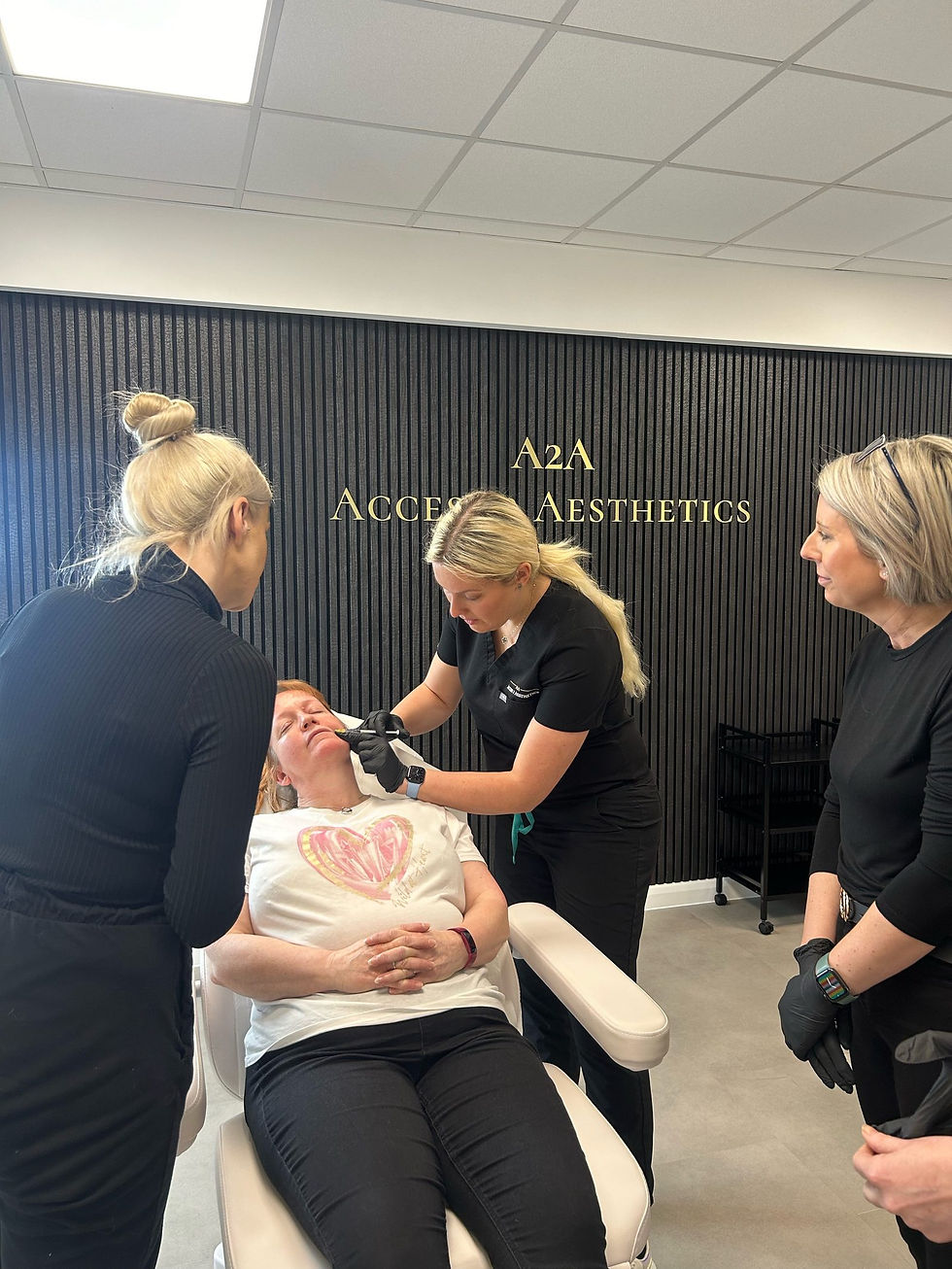
Once you're treating your own patients, a Mentorship Day brings Helen to you. The day is tailored to your needs and takes place in your clinic, with your patients. Helen observes you as you treat and gives expert guidance to help you become confident in your own practice.
7. Plan your next course
When you're ready to offer more, our Advanced Toxin and Advanced Dermal Filler courses build on your Foundation skills. You'll need a certificate from a recognised Foundation Toxin and Dermal Filler course to join. For nurses and other eligible professionals, V300 prescribing is often a longer-term goal: the nurses we train typically build their clinic first, then aim to complete the V300 within two to three years, funded by their clinic profits.
The support you get after training with A2A
Whichever step you're on, you're not on your own. Every delegate has clinical support for emergencies through our Clinical Director, Helen Coombs, who has 15 years in the aesthetics industry. You'll also have business support from our directors, including Andrew Coombs, our CEO and business mentor, who has built a business turning over £34 million+ a year and helps students set up and grow their aesthetics business.
Foundation students receive our Business Start-Up Guidance eBook, and every delegate has access to our support community and WhatsApp group, where you can ask questions and learn from others at the same stage.
Still deciding? Come to a free Open Day
If you haven't trained yet and want to see what this path looks like, join our free Aesthetics Career Open Day on Sunday 24 January 2027, 10am to 1pm, at our Treforest training academy. It's for medical professionals only, and every attendee is entered into our prize draw to win a free Foundation Toxin training course. You can read more about what happens at an A2A Open Day.
Frequently asked questions
What should I do after my aesthetics Foundation course?
Put your insurance, prescriber arrangements and paperwork in place, decide where you'll treat, and start with a small, manageable diary. Then keep building confidence with supported options such as a Shadow Day or a Mentorship Day, and plan your next course, such as Advanced Toxin or Advanced Dermal Filler training, when you're ready.
Do I need to be a prescriber to treat toxin clients after my course?
No. Toxin is a prescription-only medicine, so each toxin client needs a prescription from a prescriber, but you don't need to be a prescriber yourself to get started. Prescribers in our support group can help with your toxin clients, and many of the nurses we train aim to complete the V300 within two to three years.
What is the difference between a Shadow Day and a Mentorship Day?
On a Shadow Day you spend a full clinical day observing Helen Coombs at our sister clinic, Pro-Juvenate Aesthetics, and you don't treat any patients. On a Mentorship Day, Helen comes to your clinic and observes you treating your own patients, giving you expert guidance tailored to your needs.
When can I move on to Advanced aesthetics training?
Our Advanced courses are for medical professionals who hold a certificate from a recognised Foundation Toxin and Dermal Filler course. If you trained elsewhere, you can still join our Advanced courses with your Foundation certificate.
Will I get support from A2A after my course?
Yes. Every delegate has clinical support for emergencies through our Clinical Director, Helen Coombs, plus business support from our directors and access to our support community and WhatsApp group. Foundation students also receive our Business Start-Up Guidance eBook.
Ready to take your next step? See our price list for current course fees, or get in touch through our booking form.


Comments