


How to Choose an Aesthetics Training Course in the UK: 9 Questions to Ask

Once you've decided aesthetics is the right move, the next question is a big one: which training provider should you choose? There are plenty of courses to pick from in the UK, and from the outside they can look very similar. The course you choose shapes how confident and safe you feel when you start treating your own clients.
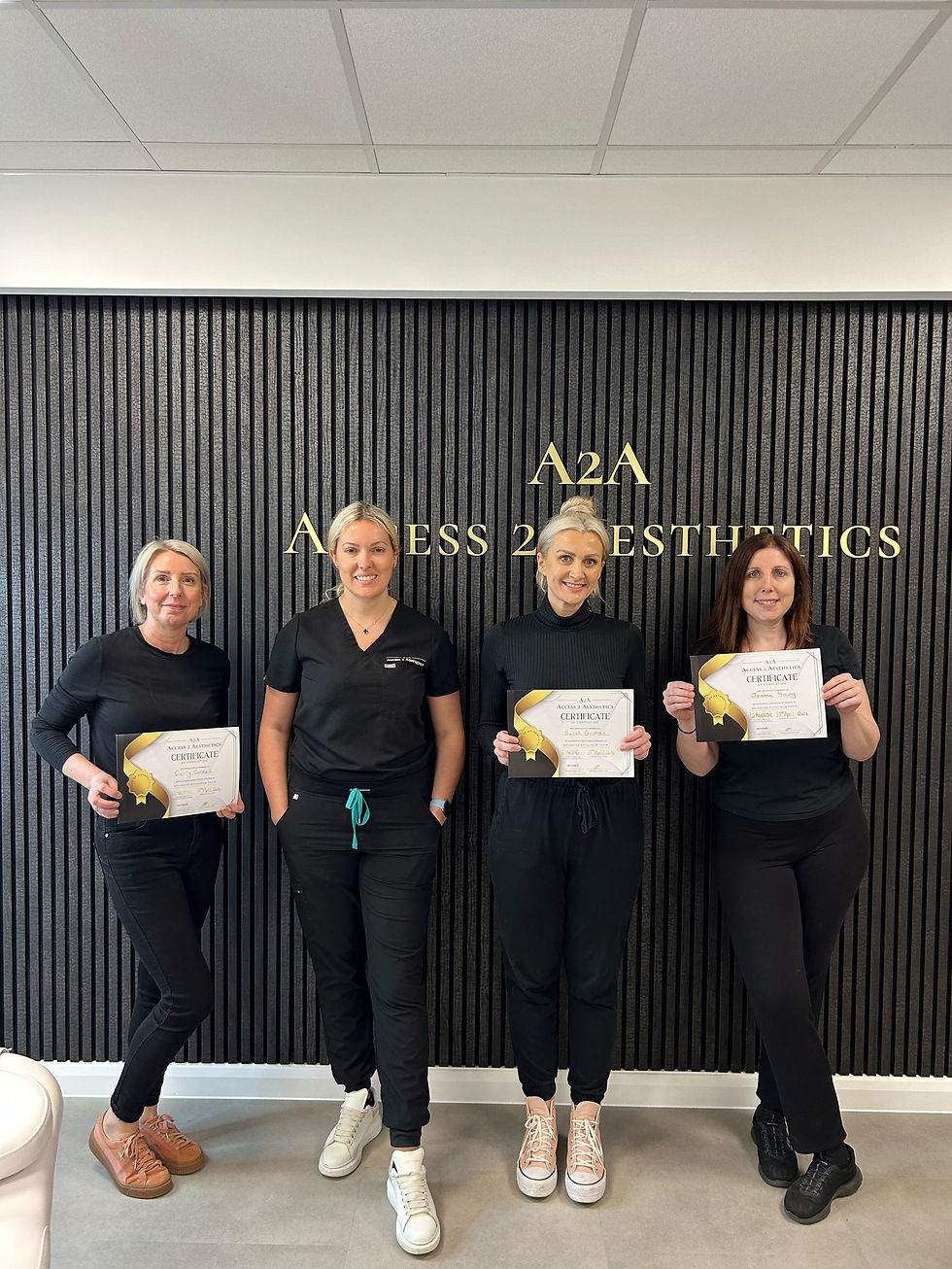
At Access 2 Aesthetics (A2A), the Aesthetics Training Academy, we speak to nurses, doctors, dentists, pharmacists and paramedics every week who are weighing up their options. This guide sets out the questions we'd encourage you to ask any provider, including us, before you book.

What makes a good aesthetics training course?
A good course is built for medical professionals, gives you real hands-on experience on live models in small groups, takes complications seriously, and supports
Questions to ask before you book
1. Is the course only for medical professionals?
Injectable treatments need a strong clinical foundation in anatomy, assessment and managing complications. Check who the course is open to and whether the provider checks your professional registration. At A2A our courses are for registered medical professionals, and we ask every student for their PIN. We don't train dental nurses or non-medics. Our guide to who can train in aesthetics in the UK explains this in more detail.
2. How big are the classes?
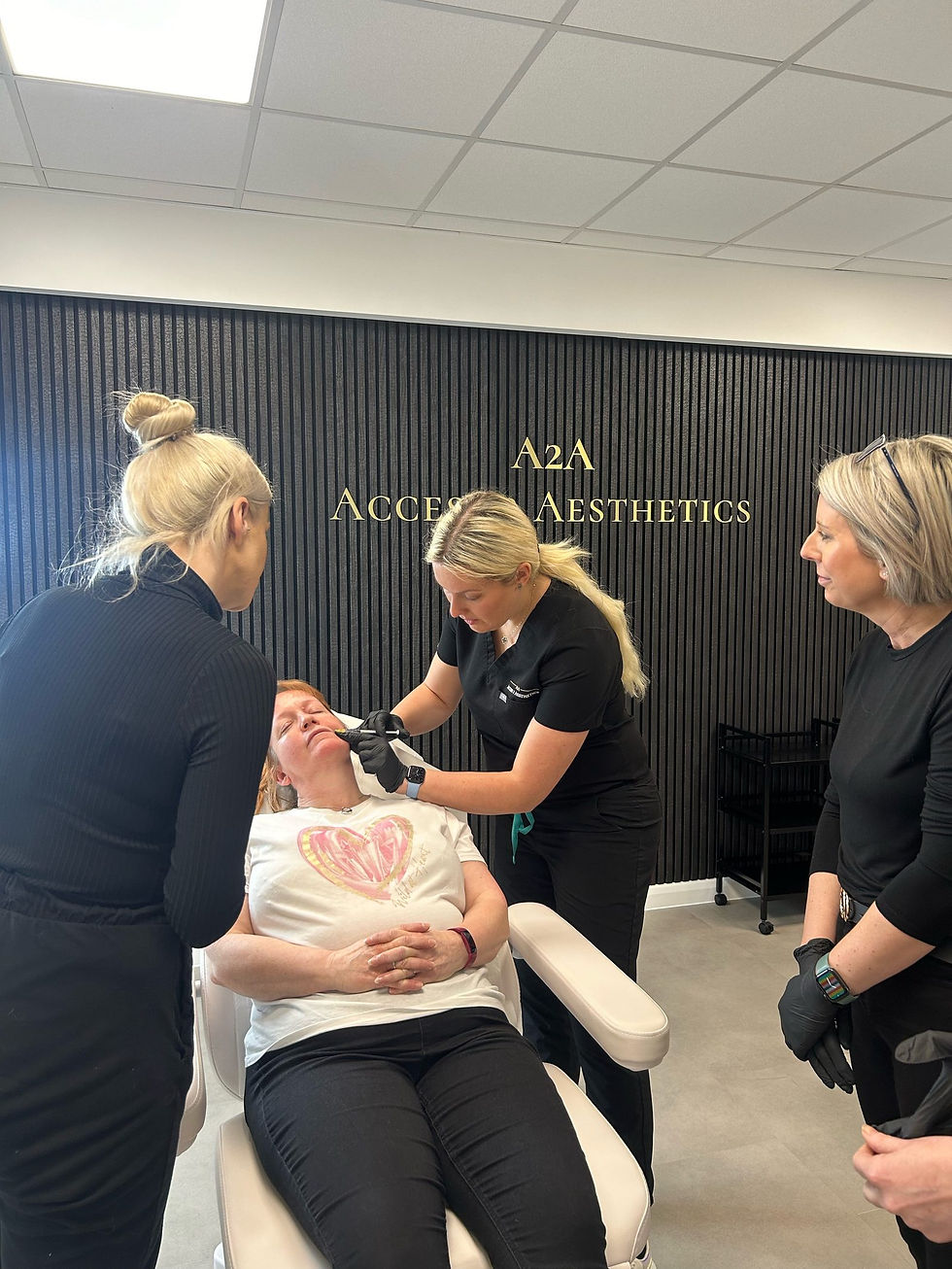
In a large group it's easy to spend more time watching than doing. Ask how many delegates there are per trainer. Our classes have a maximum of six students, so everyone gets time with their trainer, and private 1:1 training is also available if you'd rather learn on your own.
3. Will I treat live models myself?
Watching a demonstration is useful, but confidence comes from treating real faces under supervision. Ask exactly what the practical session involves. On our Foundation Toxin and Dermal Filler courses you watch a trainer treat a demonstration model, practise your technique on simulator faces, and then treat live models yourself with a trainer beside you.
4. How is the theory taught?
Good training starts before you arrive. Ask whether there's pre-course learning and what it covers. Our Foundation courses include online e-learning with video treatment demonstrations, complications training, consent and aftercare forms, and pharmacy and insurance details, so you arrive on the day ready to focus on practical skills.
5. How are complications covered, and who can I call afterwards?
This is one of the most important questions you can ask. Complications training should be part of the course, and you should know who to contact if something worries you once you're treating your own clients. Every A2A delegate has clinical support for emergencies through our Clinical Director, Helen Coombs, who has 15 years in the aesthetics industry.
6. Do I need my own insurance or prescriber to attend?
Requirements vary between providers, so it's worth checking. At A2A, our insurance covers students on the training course and our trainers prescribe all the toxin used on our courses, so you don't need your own indemnity insurance or prescriber status to attend. Before you start treating your own clients, you'll need your own insurance and a prescriber for prescription-only medicines, and our e-learning includes pharmacy and insurance details to help with that.
7. Is there a clear route to progress?
Most practitioners start with Foundation training and build from there. Ask whether the provider offers a clear next step once you're ready. Our Foundation Toxin, Foundation Dermal Filler and Combined Foundation courses lead on to Advanced Toxin and Advanced Dermal Filler training, and we also offer V300 prescribing placements and mentoring, a Shadow Day and a Mentorship Day.
8. Will they help me build a business, not just a skill?
Learning to inject is only half of starting out. You'll also need to think about where you'll work, how you'll find clients and how to run things properly. At A2A, Andrew Coombs, our CEO and business mentor, helps students set up and grow their aesthetics business. Foundation students receive our Business Start-Up Guidance eBook, and every delegate has access to our support community and WhatsApp group.
9. Are the prices clear?
Look for a provider that sets out what each course costs and what's included, so you can compare like for like. Our current class and 1:1 prices for every course are on our price list.
See the training for yourself before you decide
The best way to judge any training provider is to visit, meet the trainers and see how they teach. You're welcome to do exactly that at our free Aesthetics Career Open Day, where you can watch live demonstrations and ask Helen and Andrew Coombs anything in an open Q&A. Our next Open Day is on Sunday 24 January 2027, 10am to 1pm, at 20 Centre Court, Treforest Industrial Estate, Pontypridd CF37 5YR. It's for medical professionals only, and every attendee is entered into our prize draw to win a free Foundation Toxin course. Our guide to what happens at an Open Day tells you what to expect.
Already know which course you want? Complete our training booking form and a member of our team will be in touch to talk through dates and options.
Frequently asked questions
How do I choose the right aesthetics training course in the UK?
Look at who the course is for, how much hands-on time you get, class sizes, whether you treat live models yourself, how complications are taught, and what support you get after the course. It also helps to meet the trainers and see the training environment before you book, for example at a free Open Day.
Who can train in aesthetics at Access 2 Aesthetics?
Our courses are for registered medical professionals, including doctors, nurses, midwives, dentists, dental hygienists and therapists, paramedics, pharmacists, operating department practitioners and other allied health professionals. You'll need your professional PIN. We don't train dental nurses or non-medics.
Will I treat live models on the course?
Yes. On our Foundation Toxin and Dermal Filler courses you watch a trainer treat a demonstration model, practise on simulator faces, and then treat live models yourself under supervision.
Do I need my own insurance or to be a prescriber to attend training?
No. Our insurance covers students on the training course, and our trainers prescribe all the toxin used on our courses, so you don't need your own indemnity insurance or prescriber status to attend.
How many students are in each class?
Our courses have a maximum of six students, and private 1:1 training is also available.
What support is there after the course?
Every delegate has clinical support for emergencies through our Clinical Director, Helen Coombs, plus business support from our directors and access to our support community and WhatsApp group. Foundation students also receive our Business Start-Up Guidance eBook.

Comments