


Can You Start Aesthetics Alongside Your NHS Job? A Practical Guide for Medics

If you're a nurse, doctor, dentist, paramedic, pharmacist or other medic, you've probably wondered whether you could start private aesthetics without giving up the security of your NHS role. It's one of the most common questions we hear at Access 2 Aesthetics (A2A).
The short answer is yes. Many medics build their aesthetics work alongside their existing job, starting small and growing at their own pace. This guide explains how to do it safely and sensibly, from training and professional checks to fitting clients around your shifts.
Can you start aesthetics alongside your NHS job?
Yes. As a registered medical professional, you can train in aesthetics and treat private clients outside your NHS hours, provided you have the right training, insurance and professional standards in place. You don't need to resign, go part-time or take a career break to get started.
Most medics we train begin by seeing a few clients on their days off, in the evenings or at weekends. That lets you build skills, confidence and a client base gradually, while your NHS salary keeps you secure.
Step 1: Check your employer's policy and your professional code
Before you take on private clients, it's worth doing a few simple checks:
Your employer's policy on outside work. Many NHS organisations ask staff to declare secondary employment or private practice. Read your local policy and declare your aesthetics work if it's required.
Your professional code. Whether you're registered with the NMC, GMC, GPhC, GDC or HCPC, the same standards of conduct, consent and record-keeping apply in your aesthetics clinic as they do at work.
Working hours and rest. Plan clinic time so you're never treating clients when you're exhausted after a run of shifts. Patient safety comes first in both roles.
Step 2: Get properly trained
Good training is the foundation of a safe, successful clinic. Most medics start with Foundation training: Foundation Toxin, Foundation Dermal Filler or the Combined Foundation Toxin and Dermal Filler course. Our guide to what the Combined Foundation course covers explains the day in detail.
Training that fits around your rota
Most of our courses run from 10am to 5pm, moving to 9am to 6pm for larger class sessions, so each course needs just one day off. You can book both Foundation modules together or one at a time, which makes it easier to spread training across your rota.
Small classes and real practice
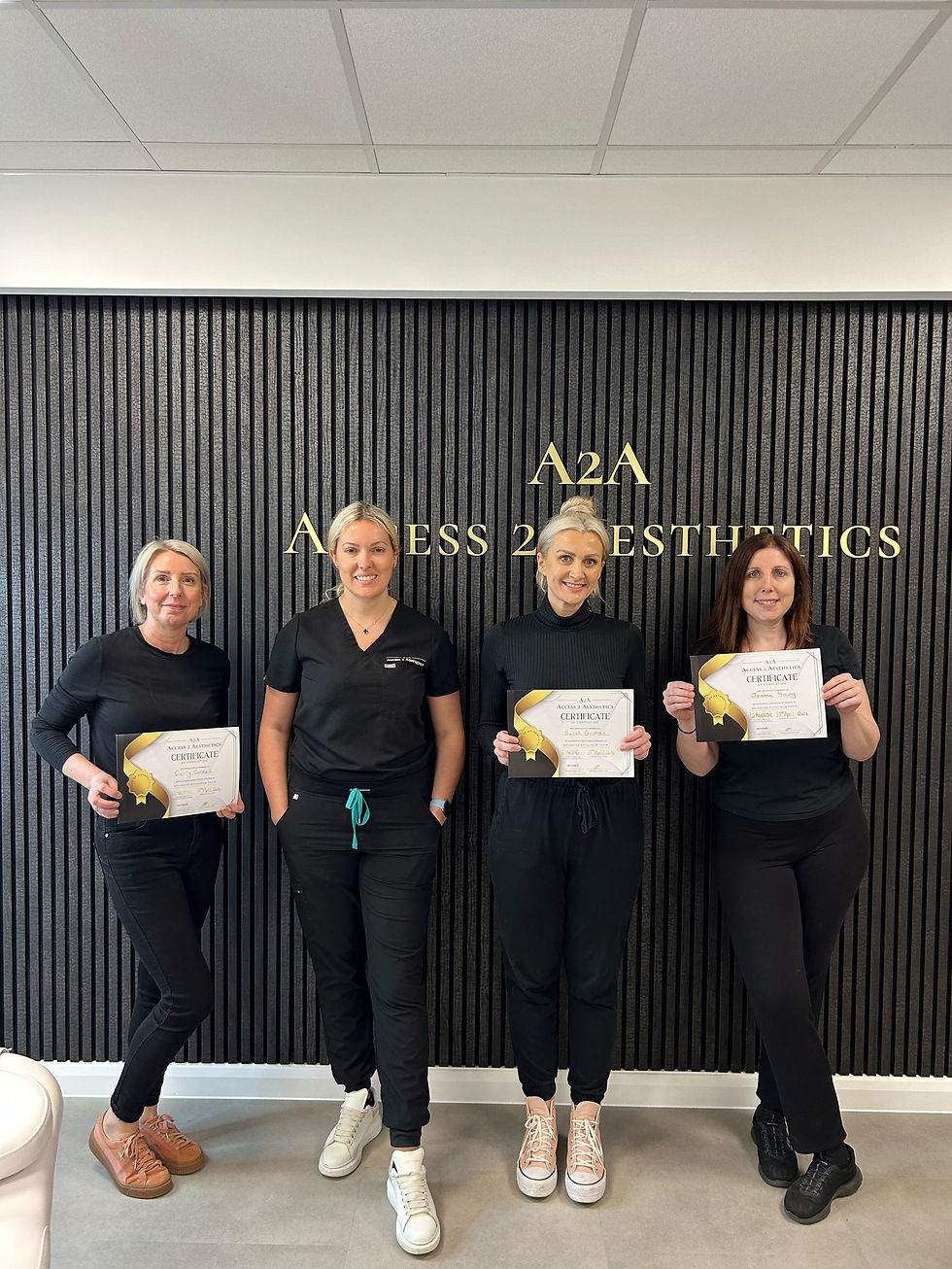
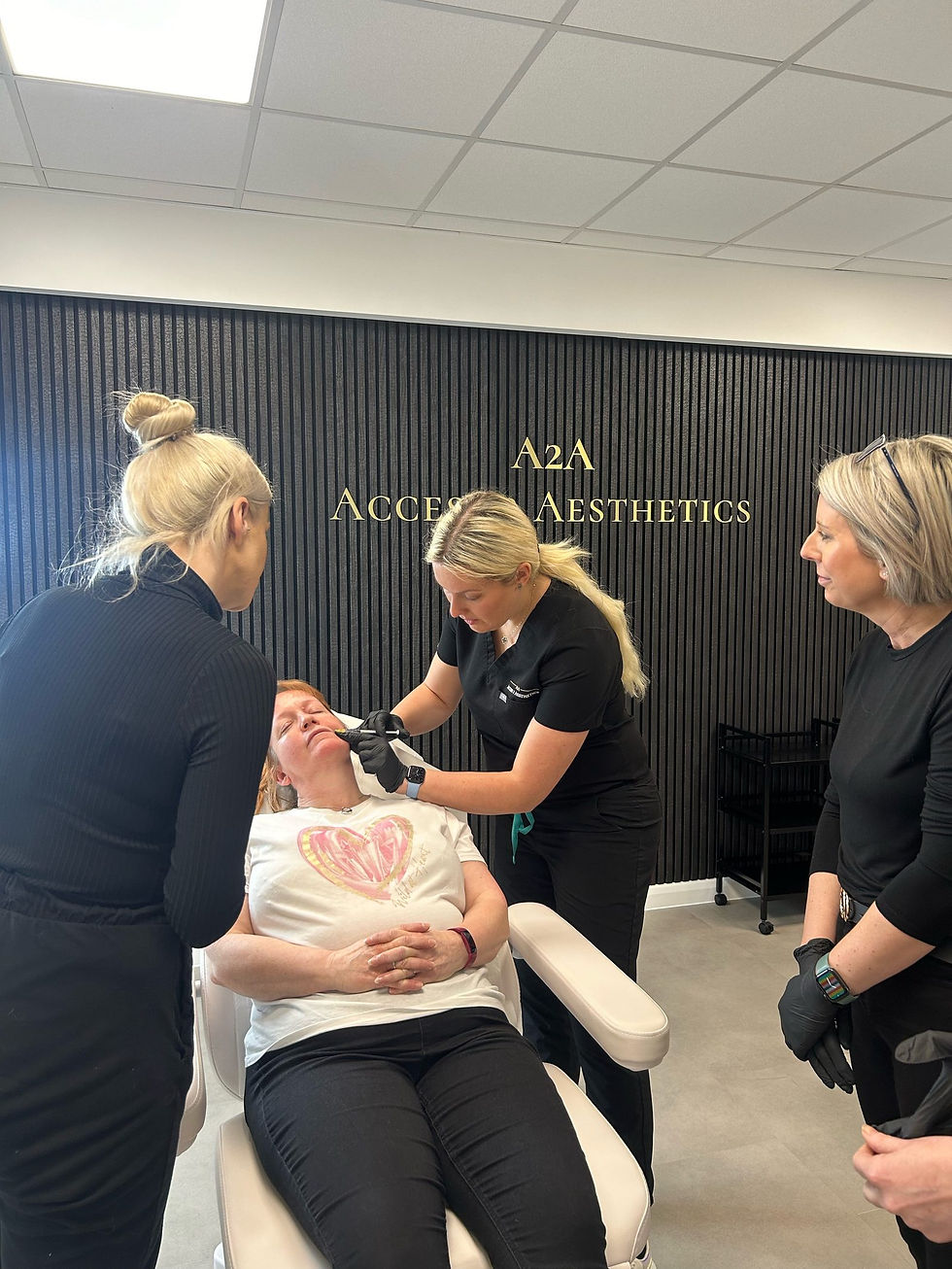
Our courses have a maximum of six students. You'll practise on simulator faces before treating live models under trainer supervision, so you leave with hands-on experience rather than just theory.
Step 3: Don't let prescribing hold you back
Many medics assume they need to be a prescriber before they can start. They don't. Dermal filler and skin treatments don't need a prescription. For toxin treatments, each client needs a face-to-face consultation and a prescription from an independent prescriber, and our support group can help you find one.
The nurses we train typically start without a prescribing qualification, build up their clinic, then aim to complete the V300 Prescribing Course within two to three years, which many fund from their clinic income. Working alongside your NHS role makes that path more manageable, because you're not relying on your clinic income from day one.
Step 4: Choose where you'll treat clients
Aesthetic practitioners usually work from a home clinic, a salon or a private clinic. Each option suits a different stage:
A home clinic can keep costs low while you build up your first clients, provided the room is clean, private and set up properly.
A salon may give you access to an existing client base, often by renting a room on set days.
A private clinic offers a professional setting and may suit you as your diary fills up.
Whichever you choose, you'll need suitable insurance and a clear process for consultations, consent and aftercare before you treat anyone.
Step 5: Build your client base gradually
Working alongside the NHS means you don't need a full diary straight away. Start with a manageable number of appointments and grow from there. Every delegate on our Foundation courses receives our Business Start-Up Guidance eBook along with their e-learning access before the course, plus free business support, covering how to set up, find clients and run your clinic as a business.
Andrew Coombs, our CEO, leads the business side of our support, so you're not left to work it out alone.
Step 6: Keep support close at hand
When you're juggling two roles, knowing help is available matters. You can refer back to your training materials whenever you need to, and every delegate has clinical support for emergencies through our Clinical Director, Helen Coombs, who has 15 years in the aesthetics industry. You'll also join our support group of nurses and other medical professionals who all help one another.
As your confidence grows, you can build your experience with a Shadow Day, a Mentorship Day or our advanced courses, such as Advanced Toxin.
See it for yourself at a free Open Day
If you'd like to talk it through before committing, our free Aesthetics Career Open Day is the ideal place to start. You'll watch live demonstrations, see how our training works and ask Helen and Andrew anything in an open Q&A. Read what happens at an A2A Open Day to know what to expect.
Our next free Aesthetics Career Open Day is on Sunday 24 January 2027, 10am to 1pm, at 20 Centre Court, Treforest Industrial Estate, Pontypridd CF37 5YR. Places are limited, so reserve your free ticket in advance.
Ready to start? See our courses on the price list, or complete our training booking form and a member of our team will be in touch.
Frequently asked questions
Can I do aesthetics while working for the NHS?
Yes. Many registered nurses, doctors and other medics start private aesthetics alongside their NHS role, often on days off or at weekends. Check your employer's policy on outside work and declare it if they ask, keep within your professional code, and make sure you have the right training and insurance before you treat anyone.
Do I need to leave my NHS job to become an aesthetic practitioner?
No. Most people build their aesthetics work gradually around their existing job, starting with a small number of clients, and only change their hours if and when their clinic grows.
Do I need to be a prescriber to start?
No. Not being a prescriber isn't a blocker to getting into aesthetics. Dermal filler and skin treatments don't need a prescription. For toxin treatments, each client needs a face-to-face consultation and a prescription from an independent prescriber, and our support group can help you find one. The nurses we train typically build up their clinic first, then aim to complete the V300 within two to three years, which many fund from their clinic income.
How long does Foundation training take?
Most of our courses run from 10am to 5pm, moving to 9am to 6pm for larger class sessions, so you only need a day off for each course. You can book the Combined Foundation Toxin and Dermal Filler course or just one module.
Where do part-time aesthetic practitioners usually work?
Aesthetic practitioners usually work from a home clinic, a salon or a private clinic. Each option has different set-up needs, and our free business support helps you choose the right one for you.
How can I find out more before I commit?
Come to our free Aesthetics Career Open Day. You'll see live demonstrations, hear from Helen and Andrew Coombs and can ask anything in an open Q&A, with no obligation to book.

Comments